
 Building a garage in Toronto is a significant investment that goes beyond simply adding parking or storage space. A well-built garage provides secure protection for your vehicle, creates additional storage, and improves the overall functionality and value of your property.
For many homeowners, a garage is a practical extension of the home, offering space for tools, seasonal storage, and everyday convenience. Whether attached or detached, a properly designed garage should be built to withstand Toronto’s climate while meeting your specific needs for access, layout, and durability.
As needs evolve, some homeowners choose to make their garage more versatile, using the space for workshops, hobby areas, or other functional extensions of the home. With the right planning, a garage can also be designed with future flexibility in mind.
Whether you’re building a simple detached garage or planning for a more customized structure, every project requires careful consideration of zoning bylaws, garage permit requirements, design choices, and construction planning. In some cases, homeowners may also explore long-term opportunities such as converting or building toward a laneway or secondary suite, which introduces additional planning and regulatory considerations.
In this guide, we break down everything you need to know about building a garage in Toronto so you can move forward with confidence and avoid costly surprises.
Key Takeaways: Building a Garage in Toronto
- Most garage projects in Toronto require a building permit, whether you’re constructing a new one or modifying an existing structure
- Zoning bylaws (size, height, setbacks) are one of the biggest factors affecting what you can build
- Detached garages are typically classified as ancillary structures, which impacts permit requirements and fees
- Additional approvals may be required for electrical (ESA), plumbing, HVAC, or laneway/secondary suite conversions
- Site-specific constraints, such as protected trees, can impact design, placement, and permitting
- Inspections are mandatory throughout construction to ensure compliance with the Ontario Building Code
- Building without permits can lead to fines, delays, or the required removal of the structure
- Proper planning and complete documentation can significantly speed up the permit approval process
When a Permit is Required
In Toronto, a building permit is required for most garage-related projects, whether you are constructing a new structure, modifying an existing one, or changing its use. Permits ensure that all work complies with zoning bylaws and the Ontario Building Code.
You will typically need a permit if you are:
- Building a new detached or attached garage
- Expanding or structurally altering an existing garage
- Converting a garage into a home office, studio, or living space
- Installing plumbing, HVAC, or significant electrical systems
Even if the project appears minor, it’s always best to confirm requirements before starting. Beginning construction without proper approvals can lead to delays, fines, or required rework.
Garage Permits & Regulations in Toronto
When planning garage construction in Toronto, it is important to understand what the city examiners are considering in order to issue the building permit. This includes:
Footprint (length and width)
Will the size of the new garage structure conform to what’s permitted for your property, or will a zoning variance be required through the Committee of Adjustment (COA)? Understanding this early is key, especially in Toronto, where regulations can vary. For a deeper look at how the COA process impacts planning and permits for standalone garages, you can read our guide on garage build permits in Toronto.
Height
The maximum height for a stand alone garage structure in the city of Toronto 13’ 1”. Any proposed garage structure that exceeds this height will require a zoning variance from the COA.
Setback
The garage structure must be a certain distance from the property line. If your proposed structure is within that specifically required setback distance than this will require a zoning variance from the COA.
Engineering
The city examiners will review the architectural plans to ensure correct foundation and structural engineering design. In certain cases, the examiner will require the plans to have an engineer’s stamp in order to receive the permit.
Fire Code
This distance between the stand-alone garage structure and the property line will determine if the fire code will be applicable.
- Greater than 48” from the property line: No fire code is applicable.
- Less than 48” more than 23.75”: Non-combustible exterior cladding must be installed (See cladding considerations below).
- Less than 23.75” from the property line: Non-combustible exterior cladding as well as Type X drywall with a 45-minute fire rating must be installed.
If all of the above checks out, then the City of Toronto building permit will be issued, and you will be ready to commence construction.
The Garage Permit Application Process in Toronto
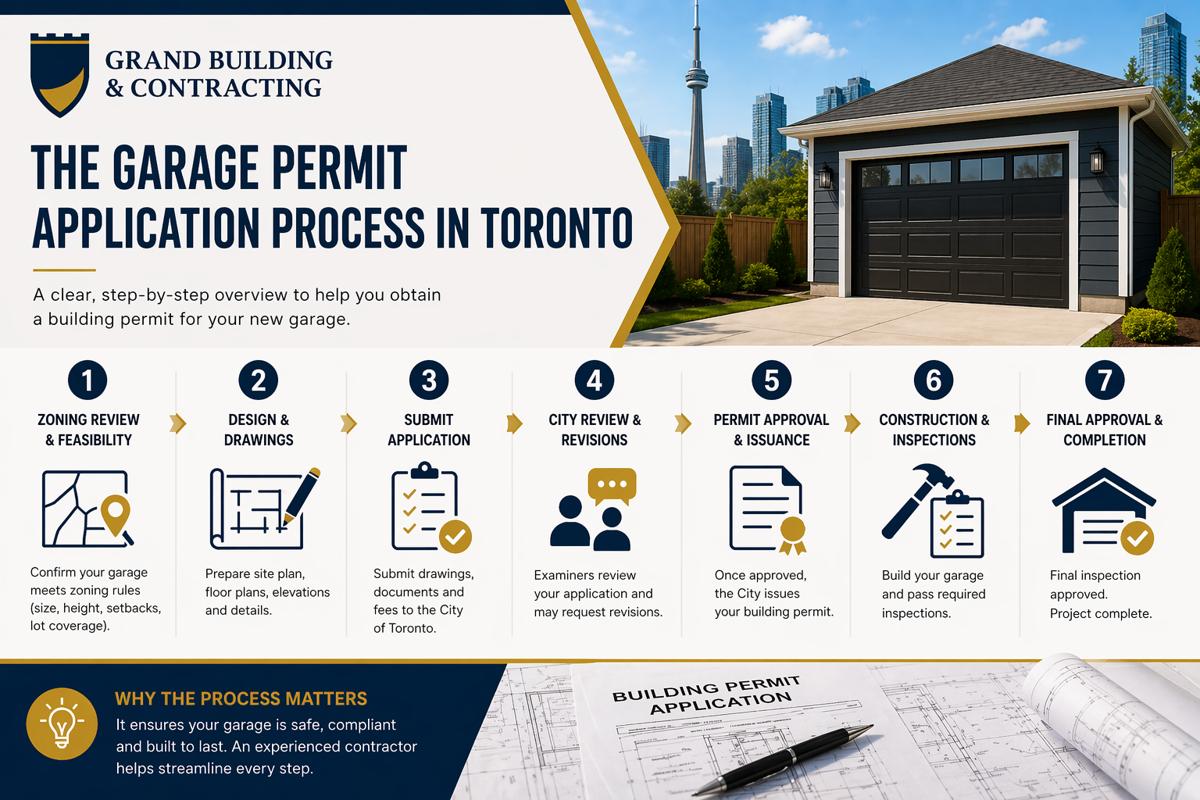
Applying for a garage building permit in Toronto involves several steps, each designed to ensure your project complies with zoning bylaws and the Ontario Building Code. Understanding this process early can help prevent delays and keep your project moving efficiently.
Step 1: Zoning Review & Feasibility
Before preparing drawings or submitting an application, it’s important to confirm that your proposed garage meets local zoning requirements. This includes reviewing allowable size, height, setbacks, and lot coverage. If your design does not comply, you may need to pursue a minor variance through the Committee of Adjustment (COA) before moving forward.
Step 2: Design & Architectural Drawings
Once feasibility is confirmed, detailed drawings must be prepared for submission. These typically include:
- Site plan showing the garage location on your property
- Floor plans and elevations
- Cross-sections and construction details
Depending on the complexity of the project, structural or engineering drawings may also be required.
Step 3: Submitting the Permit Application
Your application is submitted to the City of Toronto for review. This includes all drawings, supporting documents, and applicable fees. At this stage, accuracy is critical as missing or incomplete information can lead to delays or rejection.
Step 4: City Review & Revisions
City examiners will review your application to ensure compliance with zoning bylaws and building codes. It’s common to receive feedback or requests for revisions during this stage, and addressing these comments promptly helps move the approval process forward.
Step 5: Permit Approval & Issuance
Once all requirements are satisfied and any revisions are approved, the City will issue your building permit. At this point, you are legally authorized to begin construction on your garage.
Step 6: Construction & Inspections
After the permit is issued, construction can begin. Throughout the build, mandatory inspections will be required at key stages, such as foundation, framing, and final completion, to ensure the work meets code requirements.
Step 7: Final Approval & Project Completion
Once all inspections are completed and approved, your project is officially finalized. This confirms that your garage meets all regulatory requirements and is safe for use.
Why the Process Matters
While the permit process may seem complex, it plays a critical role in ensuring your garage is safe, compliant, and built to last. Working with an experienced garage contractor in Toronto can help streamline each step, reduce delays, and ensure your project is handled correctly from start to finish.
Zoning and Regulatory Compliance
Before a building permit can be approved, your project must meet Toronto zoning bylaws, which dictate what can be built on your property and how it must be positioned. These regulations are one of the most important factors influencing your garage design and feasibility.
Key zoning considerations include:
- Footprint & Lot Coverage: Zoning bylaws limit how much of your property can be covered by structures. Your garage must fall within these allowable limits.
- Height Restrictions: Detached garages are typically limited to a maximum height of approximately 13’1”, although this can vary depending on your zoning designation.
- Setbacks from Property Lines: Minimum distances must be maintained between your garage and property boundaries. These setbacks also influence fire code requirements and allowable materials.
- Tree Protection Considerations: The city protects certain trees, typically those with a trunk diameter of 30 cm or greater, and any removal or injury to these trees in the process of building your garage in Toronto may require a separate permit. If your proposed garage location conflicts with a protected tree or its root system, additional approvals, arborist reports, or design adjustments may be required. Addressing tree protection early in the planning phase can help avoid delays and unexpected costs.
- Permitted Use: Whether your garage is used for parking, storage, or as a habitable space (like an office or suite) will impact both zoning compliance and building code requirements.
If your proposed design does not fully comply with these regulations, you may need to apply for a minor variance through the Committee of Adjustment (COA). This process allows for exceptions but requires additional time, documentation, and approval.
Understanding zoning early in the process is critical, as it helps shape realistic design decisions and prevents costly redesigns or delays later on.
Required Documentation and Fees
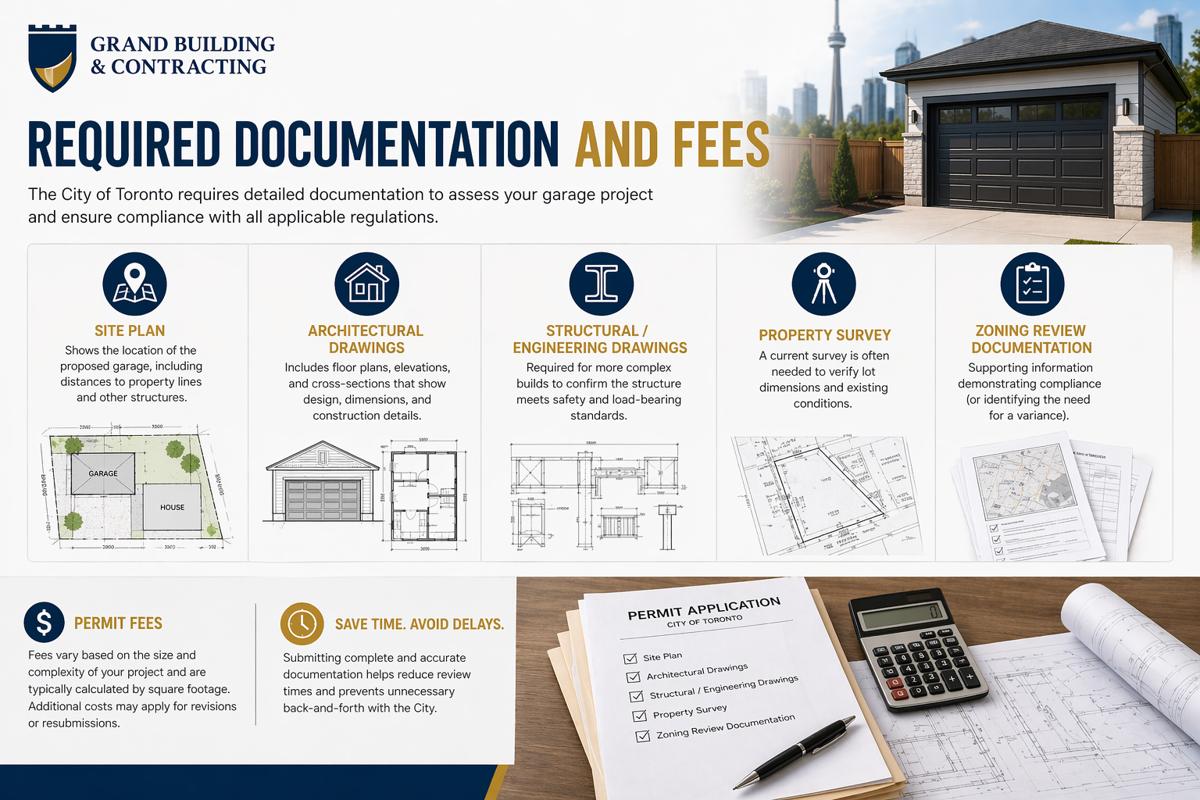
Submitting a complete and accurate permit application is one of the most important steps in avoiding delays during the garage permit approval process in Toronto. The City of Toronto requires detailed documentation to assess whether your garage project complies with all applicable regulations.
Typical submission requirements include:
Site Plan
A drawing that shows the location of the proposed garage on your property, including distances to property lines and other structures.
Architectural Drawings
These include floor plans, elevations, and cross-sections that clearly outline the design, dimensions, and construction details.
Structural / Engineering Drawings
Required for more complex builds, these confirm that the structure meets safety and load-bearing standards.
Property Survey
A current property survey is often needed to verify lot dimensions and existing conditions.
Zoning Review Documentation
Supporting information demonstrating compliance (or identifying the need for a variance).
Permits
Permit fees in Toronto vary depending on the type of structure being built.
A detached garage or similar non-habitable structure, such as a workshop, storage space, or home gym, is typically classified as an ancillary structure. These types of buildings often have a more standardized or fixed permit fee, rather than being calculated based on square footage.
In contrast, if the garage is being built or converted into a habitable living space, such as a secondary suite or laneway home, permit fees are generally calculated based on the size (square footage) of the structure and the scope of work involved. Additional costs may arise if revisions are required or if the application needs to be resubmitted.
Ensuring that all documentation is complete and accurate at the time of submission can significantly reduce review times and help avoid unnecessary back-and-forth with the city.
Risks of Building Without a Permit
Skipping the permit process may seem like a way to save time or money, but it often leads to far greater costs and complications in the long run. The City of Toronto actively enforces building regulations, and unpermitted construction can result in serious consequences.
Potential risks include:
- Stop-Work Orders: Construction may be halted immediately until proper permits are obtained.
- Fines and Penalties: Financial penalties can be issued for non-compliance.
- Forced Removal or Reconstruction: Work that does not meet code may need to be demolished or redone to meet standards.
- Insurance Issues: Unpermitted work may not be covered by insurance, leaving homeowners exposed to risk.
- Complications During Resale: When selling your home, unpermitted structures can delay or derail transactions, as buyers and lenders often require proof of compliance.
In many cases, correcting unpermitted work is more expensive and time-consuming than following the proper process from the beginning.
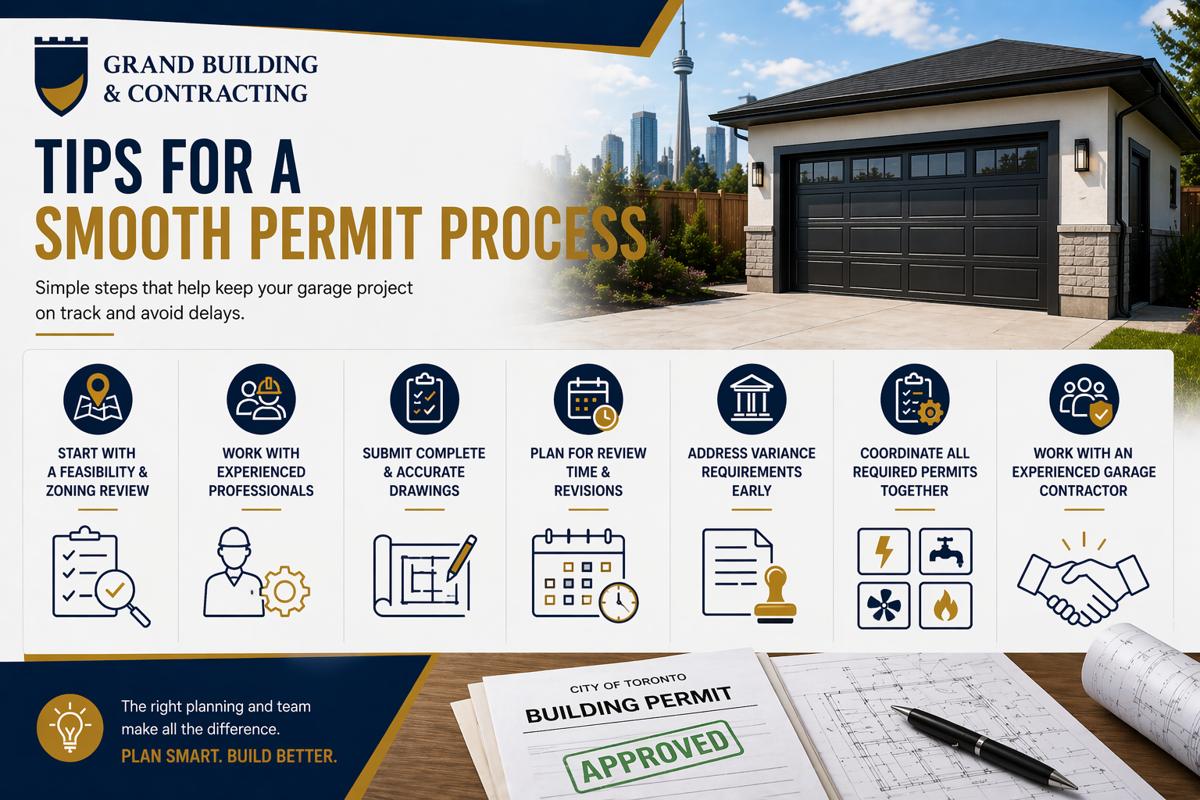
Tips for a Smooth Permit Process
While the garage permit process in Toronto can be detailed and sometimes time-consuming, there are several steps you can take to keep your project moving efficiently and avoid unnecessary delays.
- Start with a Feasibility & Zoning Review: Understanding what is allowed on your property early on helps prevent design changes later.
- Work with Experienced Professionals: Designers and general contractors familiar with Toronto regulations can help anticipate issues and prepare compliant applications.
- Submit Complete and Accurate Drawings: Incomplete or unclear documentation is one of the most common causes of delays.
- Plan for Review Time and Revisions: It’s normal for the city to request adjustments, and building this into your timeline helps manage expectations.
- Address Variance Requirements Early: If your project does not meet zoning, starting the COA process early can prevent major delays.
- Coordinate All Required Permits Together: Electrical, plumbing, and HVAC permits should be aligned with your main building permit to avoid scheduling conflicts.
Working with an experienced garage contractor in Toronto can make a significant difference. Our knowledgeable team will help guide you through each stage, coordinate submissions, and ensure that all regulatory requirements are met, keeping your project on track from planning through completion.
Additional Permits for Specialized Work
In addition to a standard building permit, certain garage construction projects in Toronto may require additional permits or approvals depending on the scope of work. These are necessary to ensure that all systems within the garage, beyond the structure itself, meet safety standards and regulatory requirements.
Electrical Permits (ESA)
Any electrical work completed as part of your garage build must be approved by the Electrical Safety Authority (ESA). This includes:
- Installing new wiring or circuits
- Upgrading electrical panels
- Adding lighting, outlets, or EV charging stations
Electrical permits are typically handled separately from the main garage building permit and require inspection upon completion.
Plumbing Permits
If your garage project includes plumbing, such as a sink, bathroom, or drainage system, a plumbing permit will be required. This is especially relevant for:
- Garage conversions
- Laneway houses or secondary suites
- Workshops with water access
All plumbing work must comply with Ontario Building Code standards.
HVAC & Mechanical Permits
Adding heating, ventilation, or air conditioning systems may require additional approvals. This includes:
- Gas heaters or furnaces
- Ductwork installations
- Ventilation systems for enclosed or habitable spaces
Proper permitting ensures these systems are installed safely and efficiently.
Laneway & Secondary Dwelling Approvals
If your project involves building a laneway house or converting your garage into a self-contained living unit, additional planning and approvals will be required. These projects must meet:
- Zoning and land use requirements
- Fire separation and safety standards
- Servicing requirements (water, sewer, hydro)
Laneway and secondary dwelling projects often involve more detailed review processes compared to standard garage builds in Toronto.
Why These Additional Permits Matter
While it may seem like extra steps, securing the proper garage permits in Toronto for specialized work ensures that all systems within your garage are safe, compliant, and built to last. Overlooking these requirements can lead to failed inspections, delays, or costly corrections later on.
Inspections and Construction Oversight
Once your garage building permit has been approved and construction begins, the City of Toronto requires mandatory inspections at key stages of the project. These inspections are an essential part of the process, ensuring that all work complies with approved drawings, zoning requirements, and the Ontario Building Code.
Required Inspections During Garage Construction
Depending on the scope of your project, inspections may include:
- Foundation Inspection: Conducted after excavation and formwork, before concrete is poured, to verify footing depth and structural preparation.
- Framing Inspection: Ensures the structural framework of the garage meets code requirements and matches approved plans.
- Insulation & Vapour Barrier Inspection: Required if the garage is insulated or intended for conditioned use, confirming proper installation and energy efficiency compliance.
- Fire Separation Inspection: Applicable when garages are built close to property lines or attached to a home, ensuring proper fire-rated materials are installed.
- Final Inspection: Conducted upon project completion to confirm that all work meets code and is safe for use.
Construction Oversight & Compliance
In addition to city inspections, proper construction oversight is critical to maintaining quality and avoiding costly issues. This includes:
- Building according to approved permit drawings
- Coordinating trades (electrical, plumbing, HVAC)
- Ensuring all required inspections are scheduled and passed
- Addressing any deficiencies identified during inspections
Missing an inspection or proceeding without approval at key stages can result in delays, rework, or complications with final sign-off.
Why Inspections Matter
Inspections are not just a formality; they ensure your garage is structurally sound, safe, and fully compliant with local regulations. Proper oversight throughout construction helps protect your investment and ensures the finished structure meets both legal requirements and long-term performance expectations.
Working with Grand Building & Contracting helps ensure inspections are properly managed, scheduled on time, and passed without unnecessary delays, keeping your project on track from start to finish.
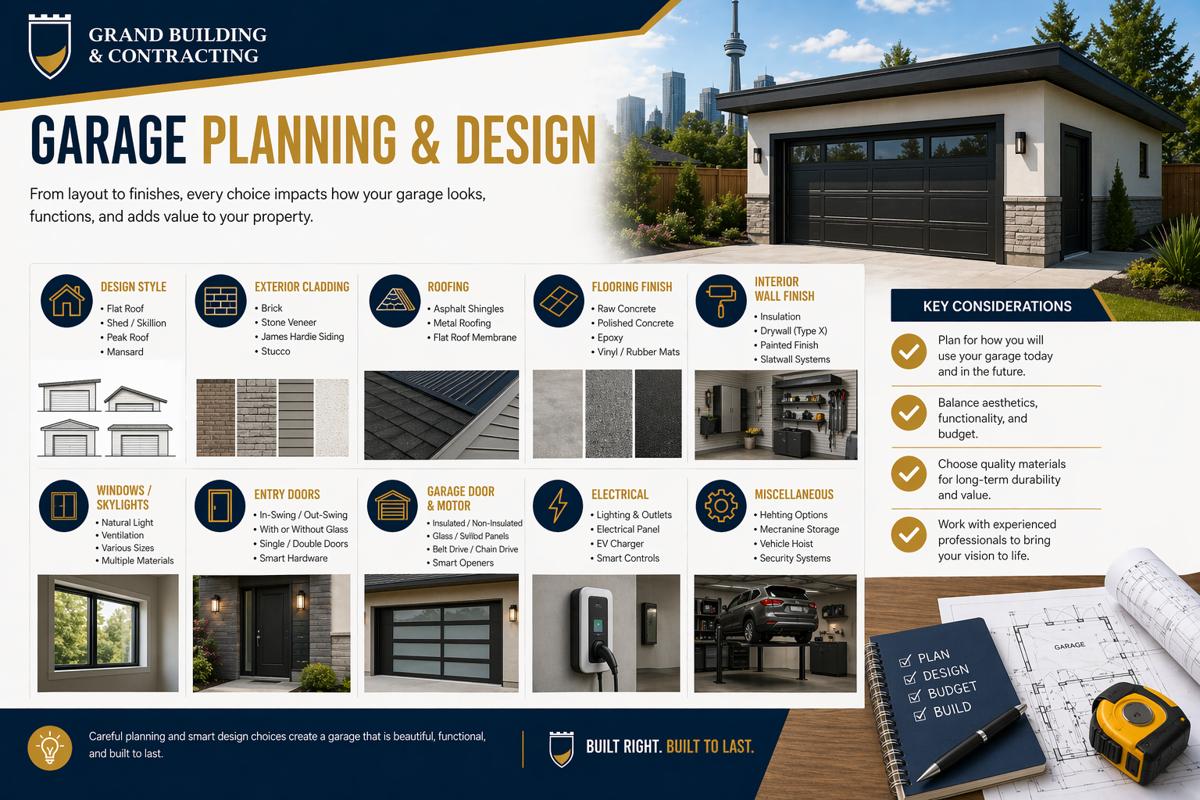
Garage Planning & Design
Aside from the mandatory Garage permit requirements in Toronto to consider when planning a stand-alone garage structure, there are many discretionary options and decisions that need to be made. Many of these decisions will be impacted by the intended use for the garage.
Whether you are constructing a basic unfinished garage used to park your car(s) or are looking for a sleek man cave/gear head dream garage, the options can be endless. Below are some of the options available, depending on the type of garage you are looking for:
Design Style
The design style will not only determine the look of the structure, but will impact different aspects of its function eg. Storage space.
- Flat roof
- Skillion or shed style
- Peak roof
- Mansard or dutch mansard
We prefer the flat roof or shed style design as it keeps things simple and provides maximum volume (storage space).
Exterior Cladding
This is a major decision as it is the material that will act as the primary aesthetic element as well as main element that will provide a barrier against the elements.
- Brick
- Concrete block
- Precast stone veneers
- Cement board
- Vinyl siding
- Aluminum siding
- Aluminum composite panel systems (ACM Panels)
- Stucco
We recommend either James Hardie lapsiding or board and batten, or stucco. Both of these exterior claddings provide tremendous value in terms of cost vs. Utility and aesthetic. Both are considered non-combustible, which is invaluable with Toronto setbacks.
Exterior Water Management & Flashing
Depending on the design style, appropriate exterior water management and flashings will need to be incorporated. This is made up of either aluminum and/or steel. These come in a variety of colours and can be used to add to the overall look of the garage.
Roof
While flat roof membranes are pretty straightforward, peaked roof require additional decisions to be made. Colour, quality, and material, such as asphalt shingles vs. metal shingles, are important options to consider.
Flooring Finish
The flooring finish will be determined by either what the end use will be, what kind of interior look is being sought, or simply cost management.
- Raw concrete
- Polished concrete
- Epoxy
- Interior style flooring such as vinyl or rubber mats (with subfloor)
While epoxy and polished concrete floors look great and are easy to clean they come at a hefty price tag.
Interior Wall Finish
This will determine if the inside of the garage is finished or unfinished. A finished space looks better and functions better, but is not necessary when parking a car. There are a variety of different interior wall finish combinations:
- Bare framed walls
- Insulation (batt vs. spray foam)
- Required Type X 45min fire rated drywall
- Fully finished with paint (we recommend semi-gloss or satin as it is easier to clean)
- Slot walls garage organizer parts and accessories.
Windows or Skylights
Adding natural light and ventilation can be important elements to consider when planning and building your garage. We recommend that you should always try and incorporate a window into a garage build.
- Size
- Location
- Material – vinyl, aluminum, composite or wood
- Operable vs. non-operable
- Clear vs. obscure glass
Doors
By incorporating an entry door it will allow for easier and secondary access to the garage structure. While it is not imperative to add an entry door into a garage build, it will definitely add utility and convenience.
- Size
- Location
- In-swing or out-swing
- With or without glass
- Single, double, or sliding entry doors
- Hardware – Standard or smart home hardware (deadbolt)
Garage Door & Garage Door Motor
Garage doors and mechanical garage door motors are key elements of any garage build. Depending on the location, orientation, use, and budget of the garage project, this will usually dictate what should be selected. Garage doors can play a significant role in the overall look, so this item should be carefully considered.
- Size
- Location
- Steel vs composite
- Insulated vs. non-insulated
- Glass v.s no-glass (with or without grills)
- Flat colour vs. wood grain
- Ceiling mounted vs. side mounted motor
- Chain drive vs. belt drive motor
- Standard vs. smart motor
- Standard tracks vs. high lift tracks
- Other items including remotes, keypad, battery back up, and emergency key release.
Electrical
Power is an important component of any garage build. From assisting in standard tasks like illumination and allowing the garage door motor to function to more non-standardized tasks like charging your electric car it is important to consider your electrical requirements.
- Service size
- Electrical panel
- Light fixtures (interior and exterior)
- Motion sensors
- Switches (standard, timer, dimmer, smart)
- Receptacles (outlets)
- Electric Vehicle (EV) chargers
Miscellaneous Considerations
As previously mentioned, the options may seem endless when building a garage. Here are some other elements that can be incorporated into your new garage build.
- Heaters (Electrical or gas and electrical)
- Other storage solutions
- Storage mezzanine
- Vehicle hoist
- Built-in sound system
- Cameras and security systems.
Garage Builders in Toronto You Can Trust
Whether you’re planning a simple detached structure or a fully customized, multi-functional space, working with experienced garage contractors in Toronto is essential to ensuring a smooth and successful build. At Grand Building & Contracting, we offer a comprehensive, full-service approach, handling everything from initial design concepts and detailed drawings to garage permit approvals and final construction.
Our team brings deep knowledge of Toronto zoning bylaws and building requirements, helping you navigate the process with confidence while avoiding costly delays. We prioritize high-quality materials, skilled craftsmanship, and clear, consistent communication at every stage of the project. From concept to completion, we focus on delivering a garage that not only meets your functional needs but also complements your property and aligns with Toronto’s building standards.
Whether you are looking to build a basic garage structure or make your tech-enabled garage dreams come true, our construction contractors in Toronto can help. Learn more about our exterior renovation services today. Contact us using the form below to get started.

