
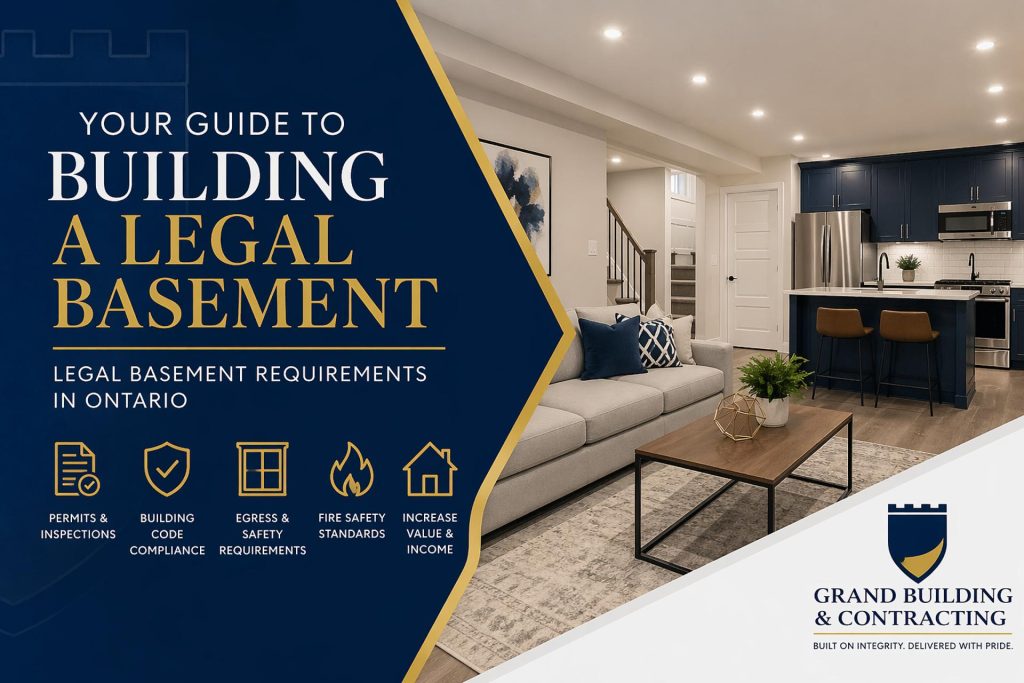
 In Toronto’s evolving real estate market, legal basement apartments (also known as secondary suites) have become a practical solution to rising housing demand and a valuable source of rental income for homeowners. More than just an upgrade, a properly built basement apartment in Ontario can significantly increase your property’s functionality and long-term value.
However, turning a basement into a legal unit in Ontario involves far more than simply finishing the space. A legal basement must comply with strict zoning bylaws, Ontario Building Code requirements, fire safety standards, and municipal permitting processes. Missing even one of these elements can lead to costly delays or compliance issues down the line.
At Grand Building & Contracting, we guide homeowners through every stage of the process, from initial feasibility assessments and design planning to permits and construction, ensuring your basement renovation is fully compliant, efficient, and built to last. Whether you’re creating a new rental suite or upgrading an existing space, understanding legal basement requirements in Ontario is the first step toward a successful project.
Key Takeaways: Legal Basement Requirements in Ontario
- A legal basement apartment must meet the Ontario Building Code and municipal zoning requirements
- Permits and inspections are mandatory for legalization
- Minimum ceiling height, egress windows, and fire separation are critical safety requirements
- Proper ventilation, heating, and insulation must be in place
- Building a non-legal basement can result in fines, insurance issues, and safety risks
- While costs vary, a legal basement can generate long-term rental income and increase property value
What Is a Legal Basement Apartment?
A legal basement apartment is a self-contained residential unit located within a home that meets all Ontario Building Code and municipal requirements. This includes proper fire separation, safe exits, adequate ceiling height, and approved permits.
Without meeting legal basement requirements in Ontario, a basement cannot be rented out safely or legally. At Grand Building & Contracting, we help homeowners navigate the full process, from design and permitting to construction, ensuring your basement renovation in Toronto meets all legal standards.
Legal Basement vs Finished Basement: Key Differences
Many homeowners have a finished basement, complete with updated flooring, lighting, and living space, and assume it can be used as a rental unit. However, there’s a critical difference between a finished basement and a legal basement apartment, and it comes down to compliance.
A finished basement is designed for personal use. It may look complete and comfortable, but it typically does not meet the requirements needed for a separate dwelling unit.
A legal basement apartment, on the other hand, is a fully approved secondary suite that meets all Ontario and municipal regulations, allowing it to be safely and legally rented.
Here’s how they compare:
- Building Code Compliance
Finished: Not always built to current code
Legal: Must fully comply with the Ontario Building Code
- Fire Safety & Egress
Finished: May lack proper fire separation or exits
Legal: Requires fire-rated assemblies, smoke alarms, and compliant egress windows
- Permits & Inspections
Finished: Often completed without permits or final inspections
Legal: Requires approved permits and successful municipal inspections
- Zoning & Use
Finished: Not recognized as a separate dwelling
Legal: Must comply with local zoning bylaws for secondary suites
- Rental Legality
Finished: Cannot legally be rented
Legal: Approved for rental use
Zoning and Municipal Compliance
Before construction begins, your property must meet local zoning requirements. In Toronto, zoning bylaws determine whether a secondary suite is permitted and outline conditions such as:
- Property type eligibility
- Parking requirements (often waived depending on location)
- Lot size and configuration
- Maximum number of units allowed
In many areas of Toronto, secondary suites are permitted as of right, but that does not mean every property automatically qualifies. Some homes may already be at maximum density or require additional approvals. If your property does not meet current zoning requirements, a minor variance application may be required.
Understanding zoning early in the process helps avoid costly delays and ensures your project is feasible from the start.
Legal Basement Permits, Inspections, and Registration in Ontario
Transforming a basement into a legal secondary suite in Ontario requires careful planning and adherence to the permit process. Homeowners must navigate zoning bylaws, building codes, and municipal requirements before construction begins.
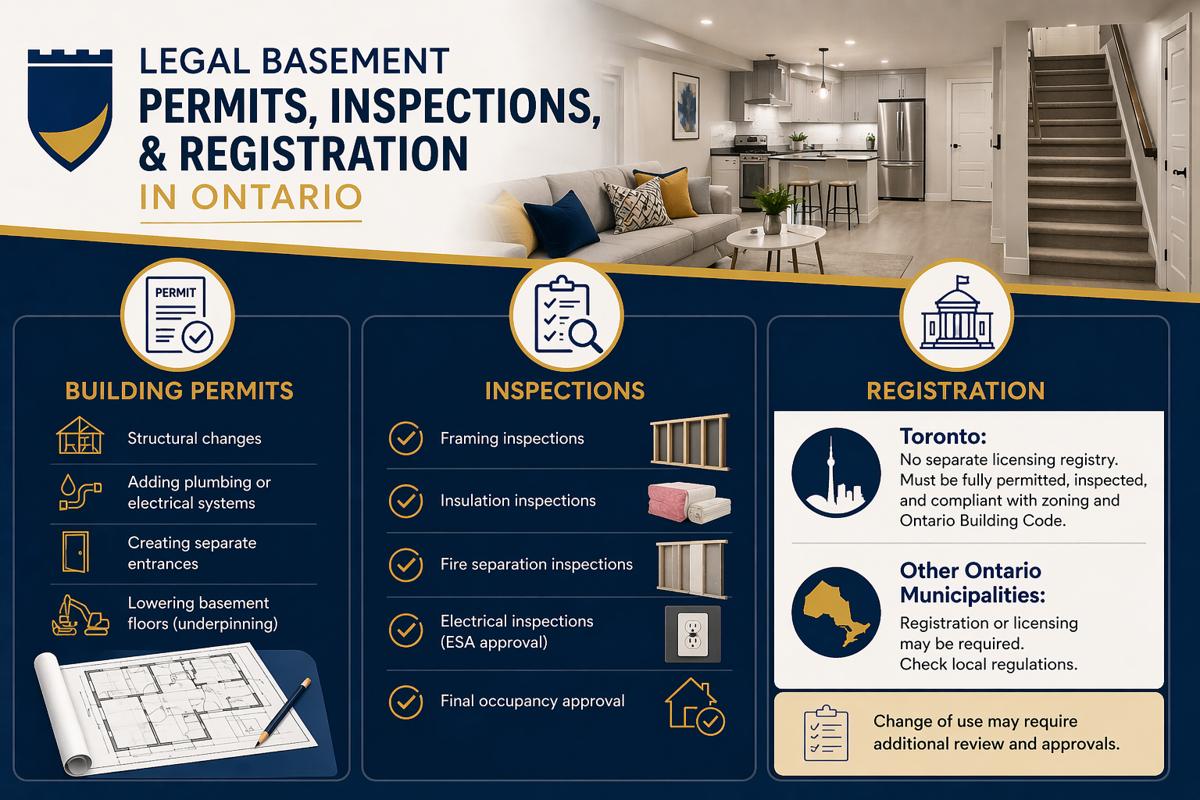
Building Permits
Transforming a basement into a legal secondary suite requires careful planning and adherence to the permit process. Homeowners must navigate zoning bylaws, building codes, and municipal requirements before construction begins.
A building permit is required for:
- Structural changes
- Adding plumbing or electrical systems
- Creating separate entrances
- Lowering basement floors (underpinning)
The process typically begins with detailed architectural drawings that demonstrate compliance with Ontario legal basement requirements. In some cases, converting a basement into a legal apartment may be considered a “change of use,” requiring additional review to ensure full compliance with building and fire codes.
Permits can be submitted by the homeowner or by a contractor or designer acting on their behalf. It’s also important to note that permit approval timelines can vary depending on project complexity and municipal workload. As an experienced home renovation contractor in Toronto, Grand Building & Contracting helps ensure all documentation is complete and reduces the risk of delays or revisions.
Inspections
Throughout construction, inspections ensure the work meets code. These may include:
- Framing inspections
- Insulation inspections
- Fire separation inspections
- Electrical inspections (ESA approval)
- Final occupancy approval
Registration
In Toronto, there is currently no separate licensing registry for secondary suites; however, the unit must be fully permitted, inspected, and compliant with zoning and Ontario Building Code requirements to be considered legal. In other Ontario municipalities, registration or licensing programs may be required, making it important to confirm local regulations before proceeding.
In some cases, converting a basement into a legal apartment may be classified as a “change of use,” which requires additional review to ensure the property meets all applicable building and fire code requirements.
Building Code and Safety Requirements For Legal Basements
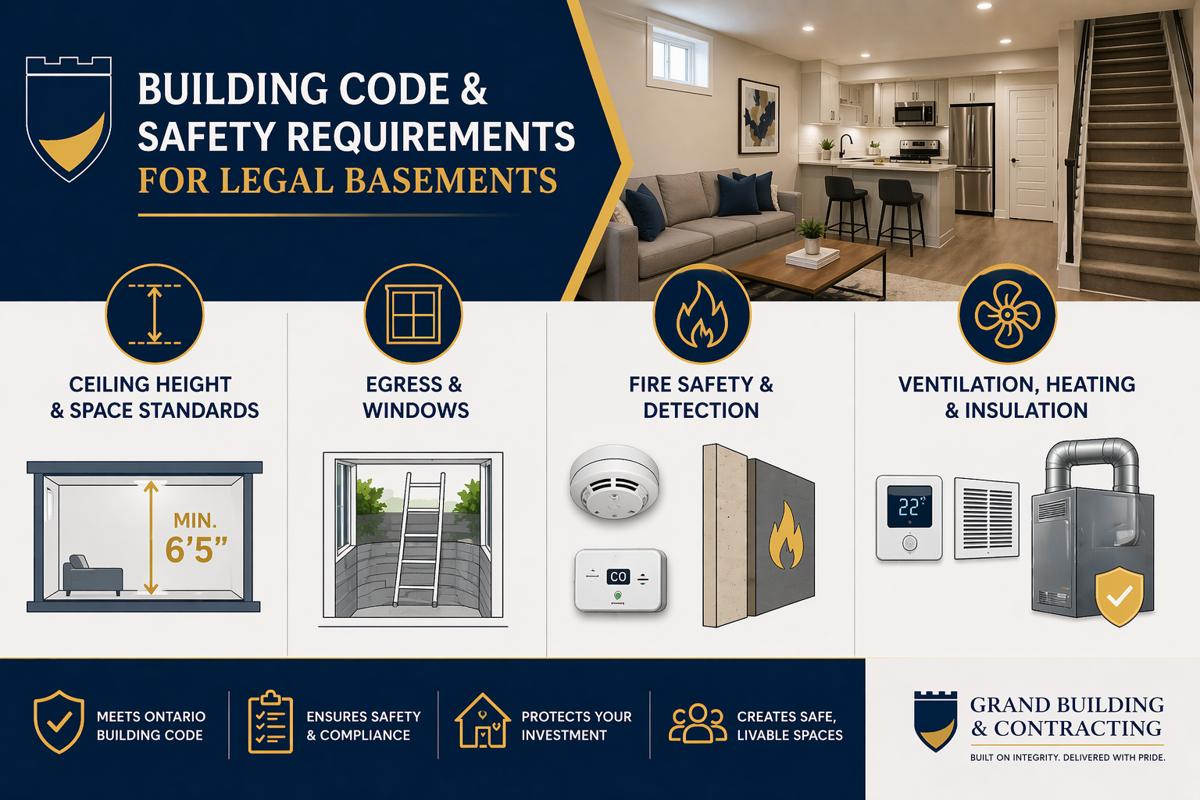
All legal basement apartments must comply with the Ontario Building Code, which prioritizes safety, livability, and structural integrity.
Ceiling Height and Space Standards
Minimum ceiling height requirements must be met for the space to be considered habitable. In many cases, this is approximately 6 feet 5 inches. Older Toronto homes often require underpinning or benching to achieve this standard.
Egress and Window Requirements
Each bedroom must include a properly sized egress window that allows occupants to safely exit in an emergency. These windows must be unobstructed and meet specific size and accessibility requirements.
Fire Separation and Detection Systems
Fire safety is one of the most critical aspects of a legal basement apartment. Compliance involves:
- Fire-rated separations between units
- Interconnected smoke alarms throughout the home
- Carbon monoxide detectors
These interconnected systems ensure early warning and help contain the spread of fire, significantly improving occupant safety.
Ventilation, Heating, and Insulation
A legal basement apartment must include proper environmental controls such as:
- Adequate heating systems
- Proper ventilation and air circulation
- Insulation for energy efficiency and soundproofing
In many cases, separate HVAC systems are installed to improve comfort and reduce noise transfer between units.
Utilities and Separate Services
A legal basement apartment comes with specific service requirements. These may include:
- Separate electrical panels or meters
- Independent HVAC systems
- Dedicated plumbing lines
The City of Toronto often encourages separate metering to ensure fair billing and efficient resource management. While this can increase upfront costs, it promotes responsible tenant usage and creates more predictable operating expenses for homeowners.
Cost Considerations and Financial Implications
The cost of building a legal basement apartment in Toronto can vary significantly depending on the scope of work.
Key cost factors include:
- Structural modifications (such as underpinning)
- Adding a separate entrance
- Fire separation upgrades
- Plumbing and electrical work
- Permit and design fees
Projects requiring extensive upgrades will sit at the higher end of the cost spectrum. However, a legal basement apartment in Ontario can generate consistent rental income, often offsetting the initial investment while increasing overall property value.
Risks and Consequences of Non-Compliance
The importance of legal compliance cannot be overstated. Legal secondary suites undergo inspections to meet stringent safety standards, ensuring occupant safety and long-term viability.
Building or renting a non-legal basement apartment can lead to:
- Fines and municipal penalties
- Orders to remove or decommission the unit
- Denied insurance claims in the event of damage, fire, personal injury or fatalities.
- Increased liability and safety risks
Insurance providers may refuse coverage if damage is linked to an illegal unit—potentially resulting in catastrophic financial loss.
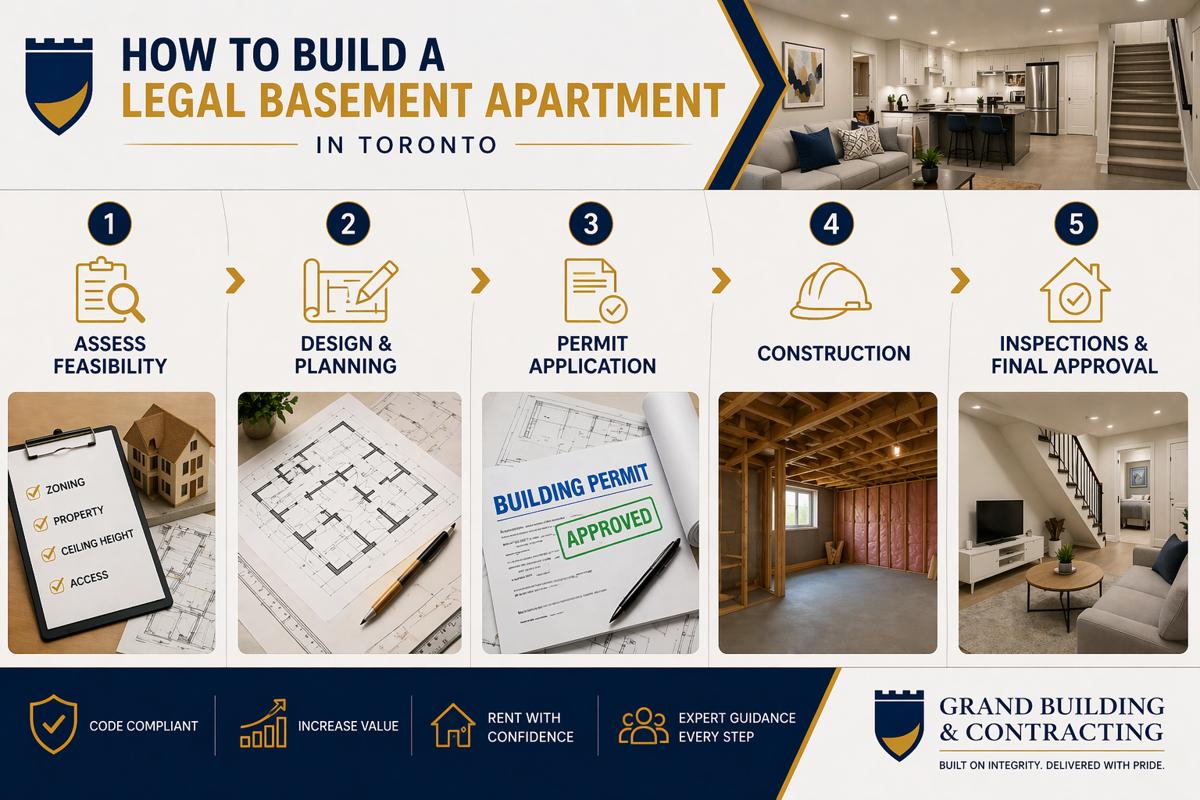
How to Build a Legal Basement Apartment in Toronto
Creating a legal basement apartment in Toronto involves a detailed, step-by-step process that ensures compliance with Ontario legal basement requirements while maximizing functionality and long-term value.
1. Assess Feasibility
The first step is determining whether your property qualifies for a legal basement apartment. This includes reviewing:
- Zoning bylaws and permitted use
- Property size, layout, and existing unit count
- Ceiling height and structural limitations
- Access for a separate entrance
At this stage, it’s also important to identify whether additional approvals, such as a minor variance, may be required. A professional assessment helps avoid costly surprises later in the project.
2. Design and Planning
Once feasibility is confirmed, the next step is creating a detailed design that meets Ontario Building Code and municipal requirements.
This phase includes:
- Space planning for kitchen, bathroom, and living areas
- Ensuring proper ceiling heights and room dimensions
- Designing compliant egress windows and exits
- Planning fire separation between units
- Integrating HVAC, plumbing, and electrical systems
Detailed drawings are prepared at this stage and will be used for permit submission. Thoughtful design is critical not just for compliance, but for creating a functional and desirable living space.
3. Permit Application
With finalized drawings, the project moves into the permit phase.
This involves:
- Submitting architectural drawings to the city
- Demonstrating compliance with zoning and building code requirements
- Addressing any revisions requested by municipal reviewers
Approval timelines can vary depending on project complexity. We work with you to help streamline the process and ensure all documentation is accurate and complete from the start.
4. Construction
Once permits are approved, construction begins. This is where the project comes to life and includes several key stages:
- Structural work (including underpinning if required)
- Framing and layout construction
- Plumbing, electrical, and HVAC installation
- Fire-rated assemblies and insulation
- Drywall, flooring, and finishing work
Inspections are conducted at various stages throughout construction to ensure compliance with legal basement requirements in Ontario.
5. Inspections and Final Approval
After construction is complete, the project must pass final inspections to be approved as a legal basement apartment.
This includes:
- Final building inspection
- Verification of fire safety systems
- Confirmation of code compliance across all systems
Once approved, the unit can be legally occupied and rented.
Build Your Legal Basement with Confidence
Legal basement apartments are a transformative way to maximize your home’s potential—providing both additional income and long-term value.
At Grand Building & Contracting, we specialize in designing and building fully compliant legal basement apartments in Toronto. From navigating permits to executing construction, our team ensures every detail meets Ontario legal basement requirements.
If you’re considering a basement renovation or secondary suite, contact us today to get started.
FAQs About Legal Basement Requirements in Ontario
What makes a basement legal in Ontario?
A legal basement apartment in Ontario must comply with the Ontario Building Code, local zoning bylaws, and fire safety regulations. This includes proper ceiling height, egress windows, fire separation between units, ventilation systems, and obtaining all required permits and inspections. Without meeting these requirements, the unit cannot be legally rented.
Do I need a permit to build a basement apartment in Ontario?
Yes, a building permit is required for most legal basement apartments in Ontario. This includes structural work, plumbing, electrical updates, new entrances, or lowering the basement floor. Working without permits can lead to fines, delays, or being required to remove the unit entirely.
How long does it take to legalize a basement in Ontario?
The timeline can vary depending on the complexity of the project, but most legal basement conversions take several months. This includes time for design, permit approvals, construction, and final inspections. Delays can occur if zoning issues or structural upgrades are required.
What is the minimum ceiling height for a legal basement in Ontario?
The Ontario Building Code typically requires a minimum ceiling height of approximately 6 feet 5 inches for habitable spaces. In older homes, achieving this height may require underpinning or lowering the basement floor.
Do I need a separate entrance for a legal basement apartment?
Yes, a separate entrance is generally required for a legal basement apartment to provide safe and independent access for occupants. This can be achieved through a walkout basement, side entrance, or newly constructed entry point, depending on the property layout.
What size window is required for a legal basement bedroom?
Basement bedrooms must have egress windows large enough to allow occupants to escape in an emergency. These windows must open fully, be unobstructed, and meet minimum size requirements outlined in the Ontario Building Code.
Can any house have a legal basement apartment?
Not all homes automatically qualify for a legal basement apartment in Ontario. While many properties allow secondary suites, zoning bylaws, lot size, and existing unit count can affect eligibility. Some homes may require a minor variance or additional approvals.
How much does it cost to build a legal basement apartment in Ontario?
The costs of building a legal basement apartment in Ontario vary depending on the scope of work. Factors like underpinning, adding a separate entrance, upgrading fire protection, and installing mechanical systems can significantly impact the total investment. While upfront costs can be substantial, rental income often offsets the expense over time.
Is it worth legalizing a basement apartment?
Yes, in most cases a legal basement apartment increases property value, creates rental income potential, and ensures compliance with safety and insurance requirements. It also reduces liability risks compared to renting an illegal unit.
What happens if I rent out an illegal basement apartment?
Renting a non-legal basement can result in fines, orders to remove the unit, denied insurance claims, and increased liability if safety issues arise. In some cases, homeowners may be forced to bring the unit up to code at a significantly higher cost.
Do I need separate utilities for a legal basement apartment?
Separate utilities are not always mandatory, but they are often recommended for legal basement apartments in Ontario. Installing separate electrical panels, HVAC systems, or meters allows for fair billing, better energy management, and improved tenant independence.
Can I convert my existing finished basement into a legal basement apartment?
Yes, but upgrades are usually required. Even if a basement is already finished, it must still meet all legal basement requirements in Ontario, including fire safety, ceiling height, ventilation, and egress standards. Additional construction work is often needed to bring the space up to code.
Do I need a contractor to build a legal basement apartment?
While not legally required, working with an experienced contractor is highly recommended. A qualified contractor like Grand Building & Contracting can manage permits, ensure code compliance, coordinate trades, and help avoid costly mistakes throughout the process.
How do I start a legal basement project with Grand Building & Contracting?
The best place to start is with a consultation. Our team will assess your property, review zoning and feasibility, and guide you through design, permits, and construction. We handle the entire process to ensure your basement apartment meets all legal requirements in Ontario.

