

Let’s face it—shovelling snow gets old fast. Whether you’re clearing the driveway before work, dealing with icy conditions, or relying on a snow removal service to show up on time, winter maintenance can quickly become a hassle.
And that’s only one reason more homeowners across Toronto and the GTA are exploring heated driveways as a convenient, long-term solution.
Heated driveways have grown in popularity over the last several years as snow-melting technology has become more efficient and accessible. Modern systems can help reduce winter maintenance, improve safety around your property, and keep driveways and walkways clear throughout the season.
While heated driveways are still considered a premium upgrade, advances in automation, controls, and system design have made them more practical than ever before. Whether you’re replacing an aging driveway, planning an exterior renovation, or building a new home, a heated driveway can help make winter a little easier.
As experienced general renovation contractors in Toronto, Grand Building & Contracting helps homeowners design and install heated driveway systems tailored to their property, electrical capacity, and lifestyle. From heated concrete driveways and heated interlock driveways to heated walkways, there are a variety of solutions available depending on your goals and budget.
What Is a Heated Driveway?
A heated driveway is exactly what it sounds like: a driveway with a snow-melting system installed beneath the surface. When the system is running, it generates heat that rises through the driveway, helping prevent snow and ice from building up during the winter.
Instead of requiring you to shovel after every snowfall, a heated driveway works in the background to keep the surface clear. By maintaining temperatures above freezing, snow is melted as it falls, reducing accumulation and helping keep the driveway safe and accessible.
For many homeowners, it’s a convenient alternative to shovelling, snow blowers, and annual snow removal contracts. It can also help reduce icy patches and slippery conditions around the property, making it easier to get in and out of your home during the winter months.
While driveways are the most common application, snow-melting systems can also be installed beneath walkways, front entrances, exterior stairs, patios, and other outdoor surfaces. Many homeowners choose to combine a heated driveway with a heated walkway system to create a safe, snow-free path from the street to their front door.
How Heated Driveway Systems Work
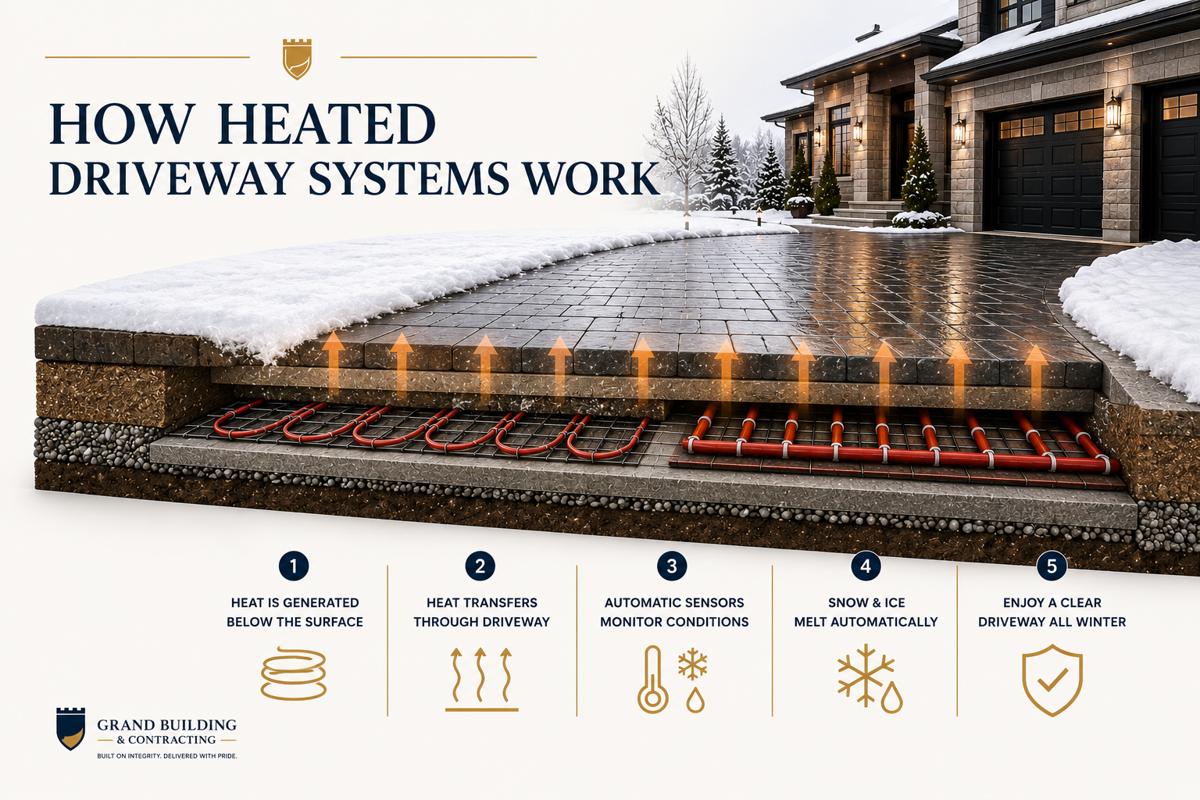
Heated driveway systems generate heat beneath the driveway surface using either electric heating cables or hydronic tubing. Once activated, heat rises through the driveway material and prevents snow and ice from accumulating on the surface.
Step 1: Heat Is Generated Below the Surface
Electric systems use specialized heating cables installed beneath the driveway, while hydronic systems circulate heated water through a network of tubing. Both systems are designed to create consistent heat coverage across the driveway surface.
Step 2: Heat Transfers Through the Driveway
As the system operates, heat radiates upward through the concrete, interlock, or other driveway material. This warms the surface and prevents snow and ice from bonding to it.
Step 3: Automatic Sensors Monitor Conditions
Most modern heated driveway systems include temperature and moisture sensors. These sensors continuously monitor weather conditions and detect when snowfall or freezing temperatures are present.
Step 4: Snow and Ice Melt Automatically
When snow begins to fall, the system activates automatically and melts precipitation as it lands. This helps prevent accumulation and reduces the need for shovelling, salting, and other winter maintenance.
Step 5: Enjoy a Clear Driveway All Winter
The result is a safer, cleaner, and more convenient driveway that remains accessible throughout the winter season. Homeowners can spend less time managing snow and more time enjoying the benefits of a low-maintenance exterior space.
Where Heated Driveway Systems Can Be Installed
One of the advantages of modern heated driveway systems is their versatility. Depending on the project, heating elements can be installed beneath a variety of surfaces.
Common applications include:
- Concrete driveways
- Interlock driveways
- Natural stone driveways
- Walkways and pathways
- Front entrances
- Exterior stairs
- Courtyards and patios
Whether you’re planning a new driveway installation or upgrading an existing outdoor space, snow-melting technology can often be incorporated into the design.
Types of Heated Driveway Systems
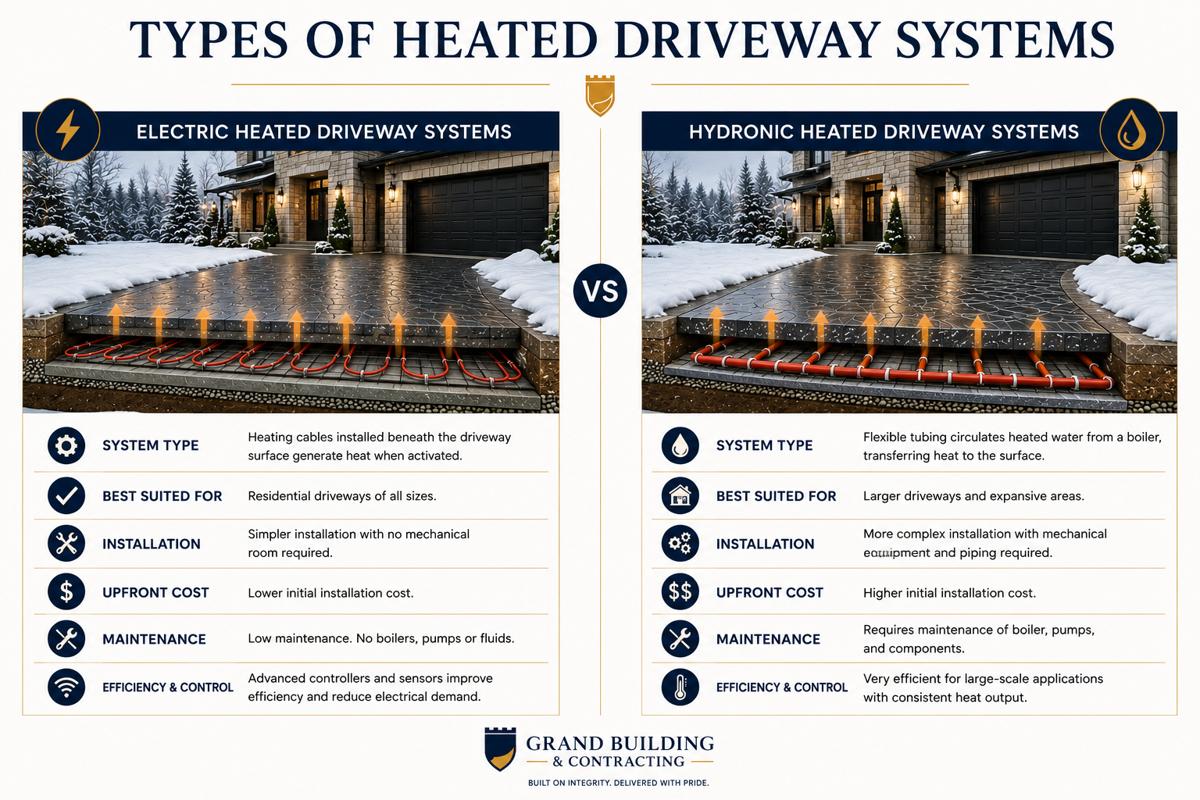
There are two primary types of heated driveway systems available today: electric systems and hydronic systems. Both are effective at melting snow and ice, but they operate differently and each offers unique advantages depending on the property and project requirements.
Electric Heated Driveway Systems
Electric heated driveway systems have become increasingly popular in residential applications due to their simplicity, reliability, and flexibility.
The system consists of heating cables that are installed beneath the finished driveway surface. Once activated, the cables generate heat that radiates upward through the driveway material and melts snow and ice.
For many homeowners, electric systems provide an excellent balance between performance and installation costs. They can be installed beneath concrete, interlock pavers, and natural stone surfaces, making them suitable for a wide range of driveway designs.
One of the biggest advantages of electric systems is the relatively low maintenance requirements. Unlike hydronic systems, there are no boilers, pumps, or circulating fluids that require ongoing servicing.
Advancements in controller technology have also improved the practicality of electric heated driveways. Multi-zone controllers and automated sensors allow systems to operate more efficiently while reducing electrical demand.
Hydronic Heated Driveway Systems
Hydronic systems use heated water rather than electric cables to generate heat.
Flexible tubing is installed beneath the driveway surface and connected to a boiler system. Heated water circulates through the tubing network, transferring warmth to the surface above and preventing snow and ice accumulation.
Historically, hydronic systems were often recommended for larger driveways because they could efficiently heat expansive areas. However, the installation process is typically more complex and requires additional mechanical equipment, including boilers, pumps, controls, and piping infrastructure.
As a result, hydronic heated driveway systems generally have higher upfront installation costs than electric alternatives. They remain an excellent solution for certain large-scale projects, but they are not always necessary for residential properties.
Heated Concrete Driveways vs Heated Interlock Driveways: Which Is Right For You?
The heating system itself is only one component of the project. Homeowners must also decide which surface material best suits their property and design goals.
A heated concrete driveway offers a clean, durable appearance and excellent long-term performance. Concrete provides efficient heat transfer and can complement a variety of architectural styles.
A heated interlock driveway offers greater design flexibility and allows homeowners to choose from a wide range of colours, patterns, and textures. Interlock pavers are a popular choice for upscale exterior renovations because they combine visual appeal with durability and functionality.
Both options can successfully incorporate driveway heating technology. The right choice depends on your property’s design, budget, and overall renovation objectives.

Benefits of Heated Driveways
For many homeowners, heated driveways are about much more than convenience. They can improve safety, reduce maintenance requirements, and help protect the long-term condition of exterior surfaces.
Eliminate Snow Shovelling and Winter Maintenance
The most obvious benefit of a heated driveway is the ability to reduce or eliminate the need for snow removal significantly.
Rather than waking up early to shovel before work or relying on a third-party snow removal contractor, the system automatically melts snow as it falls. This can save considerable time and effort throughout the winter season.
For homeowners with larger driveways, busy schedules, mobility limitations, or simply a desire to avoid winter maintenance, a heated driveway can dramatically improve day-to-day convenience. It also eliminates the uncertainty that often comes with snow removal services. There’s no need to wait for a contractor to arrive or worry about whether the driveway will be cleared before leaving the house.
Improve Safety Around Your Property
Snow and ice create significant safety hazards throughout the winter months. Slippery driveways, icy walkways, and snow-covered steps can increase the risk of falls and make it more difficult to access the property safely.
A heated driveway system helps maintain clear surfaces by preventing snow and ice from accumulating in the first place. This can improve accessibility for homeowners, visitors, and service providers throughout the winter.
When combined with a heated walkway system, homeowners can create a safer path from the driveway to the front entrance, reducing the need for salt and manual snow removal.
Protect Your Driveway Surface
Toronto’s freeze-thaw cycles can be particularly hard on exterior surfaces.
When water enters small cracks and freezes, it expands, gradually contributing to deterioration over time. Repeated freeze-thaw cycles can accelerate wear on both concrete and interlock surfaces, leading to cracking, shifting, and costly repairs.
By preventing snow and ice accumulation, heated driveway systems help reduce prolonged exposure to freeze-thaw conditions. They also reduce the need for salt and chemical de-icing products, which can contribute to surface deterioration and impact surrounding landscaping.
For homeowners investing in a new driveway, protecting the long-term condition of the finished surface can be a valuable benefit.
Increase Property Value and Convenience
Heated driveways are often viewed as a premium property feature that enhances both comfort and functionality.
Much like smart home technology, outdoor living spaces, or custom landscaping, a heated driveway can improve the overall usability of the property and contribute to a more convenient lifestyle.
While every buyer’s priorities are different, many homeowners appreciate the ability to maintain a snow-free driveway and walkway without the time and effort typically associated with winter maintenance.
Design and Planning Considerations
Before installing a heated driveway, several factors should be evaluated to ensure the system is properly designed and performs efficiently. Every property is different, and a successful installation requires more than simply selecting a heating system and turning it on.
- Driveway Size and Layout: The size, shape, and configuration of the driveway will influence system design, heating requirements, and overall installation costs. Larger driveways may require additional heating cables, multiple heating zones, or advanced controllers to ensure efficient operation.
- Surface Material Selection: Heated driveway systems can be installed beneath concrete, interlock pavers, natural stone, and other hardscape surfaces. The chosen material can impact installation methods, durability, appearance, and heat transfer efficiency.
- Drainage and Grading Requirements: Proper drainage remains essential even with a snow melting system. As snow melts, water must be directed away from the driveway and foundation to prevent pooling, refreezing, and moisture-related issues.
- Electrical Capacity and Utility Requirements: Electric heated driveway systems require sufficient electrical service to operate effectively. An assessment of your home’s electrical panel and available capacity should be completed before finalizing the system design.
For many homeowners, a heated driveway is incorporated into a larger exterior renovation project. Whether you’re replacing an aging driveway or redesigning your property’s curb appeal, integrating snow melting technology during construction is often the most efficient approach.
The Heated Driveway Installation Process
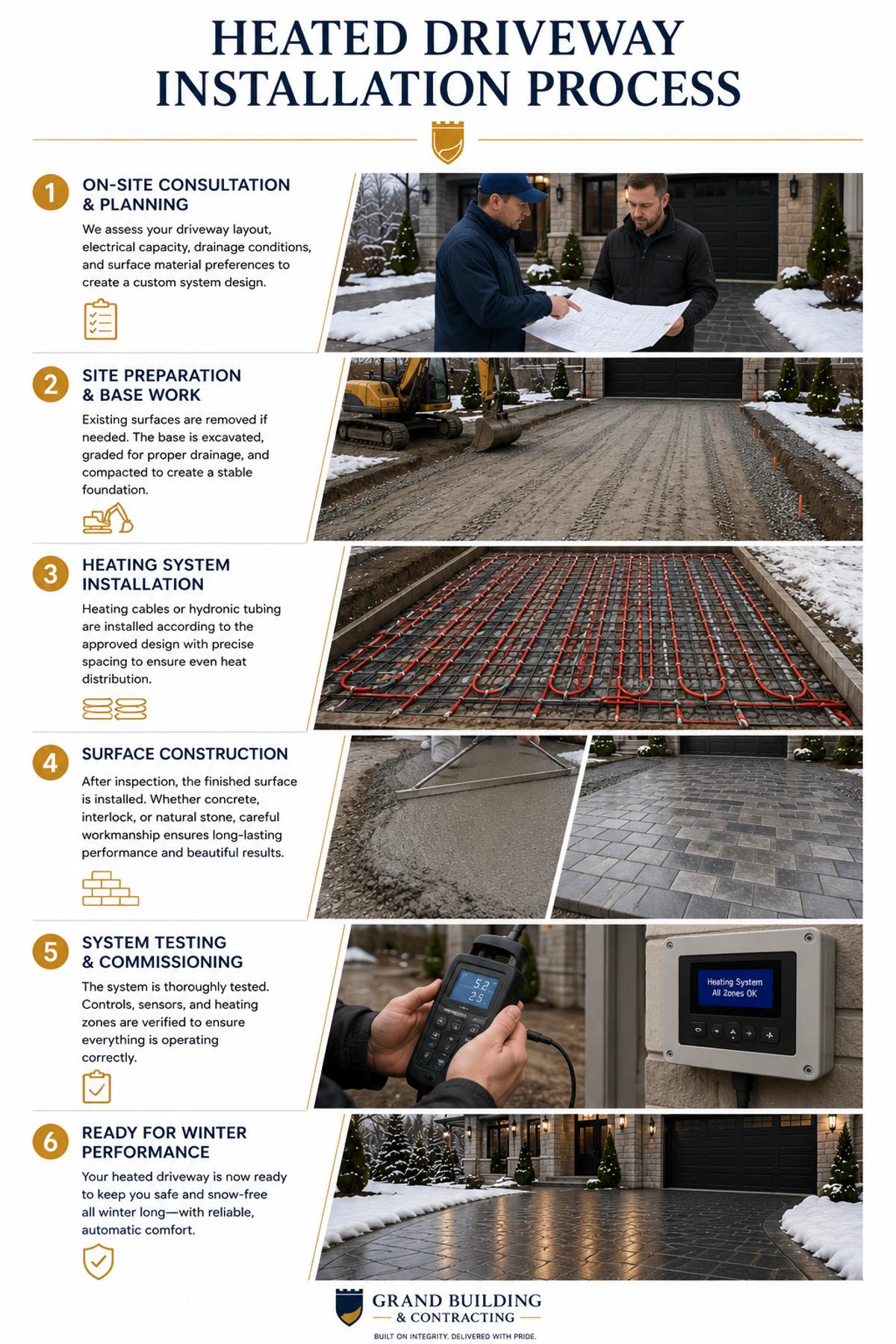
Installing a heated driveway involves much more than simply placing heating cables beneath a finished surface. Proper planning, site preparation, system design, and installation all play an important role in ensuring reliable long-term performance.
While every project is unique, most heated driveway installations follow a similar step-by-step process.
Step 1: Initial Consultation & System Design
Every heated driveway project begins with an on-site consultation. During this stage, the driveway layout, electrical capacity, drainage conditions, and desired surface materials are reviewed to determine the most suitable system for the property.
Factors such as driveway size, slope, local snow conditions, and the home’s available electrical service all influence the final design. Based on these findings, a custom heating layout is developed to ensure consistent coverage and efficient system performance.
This is also when homeowners decide whether an electric heated driveway system or a hydronic heated driveway system is the best fit for their needs and budget.
Step 2: Site Preparation & Excavation
Once the design is finalized, site preparation begins. If an existing driveway is being replaced, the old surface is removed and the area is excavated as needed.
The driveway base is then prepared and properly graded to create a stable foundation for the new system. Establishing proper drainage during this stage is critical, as melted snow and water must be directed away from the driveway and home’s foundation.
Taking the time to properly prepare the base helps support both the heating system and the finished driveway surface for years to come.
Step 3: Installing the Heating System
With the base prepared, the heating elements can be installed.
For electric systems, specialized heating cables are carefully laid out according to the approved design. For hydronic systems, flexible tubing is installed and connected to the appropriate mechanical equipment.
Careful spacing is essential during this stage. The heating elements must be positioned to provide even heat distribution across the driveway while avoiding cold spots or areas where snow could accumulate.
Sensors, controls, and other system components are also installed at this time to allow for automatic operation and monitoring.
Step 4: Constructing the Finished Driveway Surface
After the heating system has been installed and inspected, the finished driveway surface can be constructed.
Whether the project involves a heated concrete driveway, heated interlock driveway, or another hardscape material, attention to detail is critical. The finished surface not only impacts the appearance of the driveway but also plays an important role in heat transfer and overall system performance.
At this stage, homeowners begin to see the project come together as the driveway takes its final shape.
Step 5: Testing & System Commissioning
Before the driveway is put into service, the entire system undergoes testing and commissioning. Heating zones, sensors, controls, and electrical connections are checked to ensure everything is functioning properly. Automated settings are programmed, system performance is verified, and any final adjustments are made.
Once testing is complete, the heated driveway is ready for use and prepared to automatically respond to winter weather conditions.
Step 6: Enjoy a Safer, Snow-Free Driveway
With installation complete, homeowners can enjoy the convenience of a driveway that helps prevent snow and ice accumulation throughout the winter.
Modern heated driveway systems are designed to operate automatically, helping reduce the need for shovelling, salting, and other winter maintenance. The result is a safer, more accessible driveway and a more enjoyable winter experience overall.
How Much Power Does a Heated Driveway Require?
One of the most common questions homeowners ask is whether their existing electrical service can support a heated driveway system.
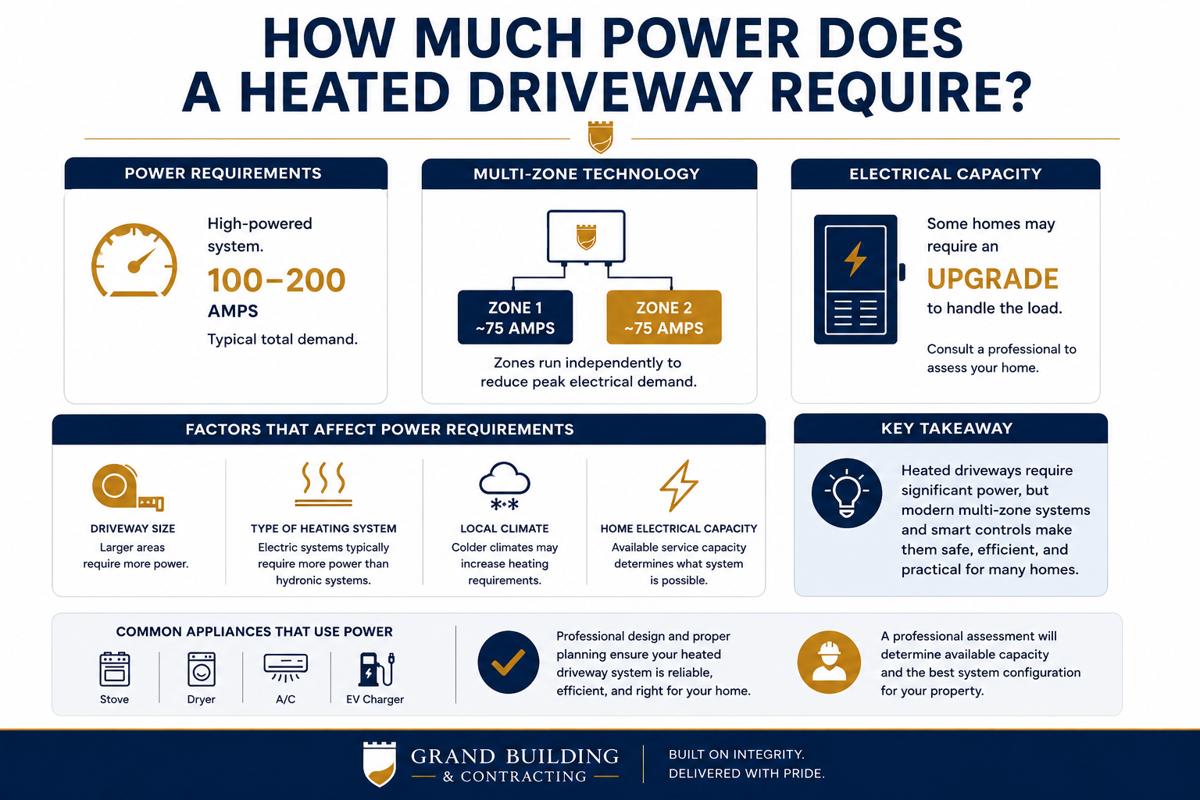
The answer depends on several factors, including the size of the driveway, the heating system selected, local climate conditions, and the amount of electrical capacity already being used by the home.
While heated driveway systems have become more efficient over the years, larger installations can still require a significant amount of power. This is why electrical planning is one of the most important aspects of any heated driveway installation.
Understanding Amperage Requirements
Every heated driveway system requires electricity to generate heat. The larger the driveway, the greater the potential electrical demand.
In some cases, a large heated driveway may require well over 100 amps to operate if the entire system is activated simultaneously. For homeowners with a standard 200-amp electrical service, this can create challenges when combined with the normal electrical demands of the home.
Appliances such as electric stoves, dryers, air conditioning systems, and electric vehicle chargers all consume power. A heated driveway system must be designed in a way that allows the home to continue operating safely and efficiently.
Multi-Zonal Controller Technology
One of the biggest advancements in driveway heating technology has been the introduction of multi-zonal control systems.
In the past, larger driveways often required hydronic systems because electric systems could place significant demands on a home’s electrical service. Nowadays, modern controllers have changed that equation.
For example, imagine a heated driveway system that would require 150 amps if the entire driveway operated as a single zone. On a typical 200-amp service, this would leave only 50 amps available for the rest of the home. A multi-zonal controller divides the driveway into separate heating zones. Instead of operating simultaneously, each zone runs independently according to a programmed schedule. A system that would otherwise require 150 amps at one time might instead operate as two 75-amp zones, significantly reducing peak demand.
This technology has dramatically expanded the viability of electric heated driveways and allows many larger residential driveways to utilize electric systems that may not have been practical just a few years ago.
Modern controllers also offer a wide range of customization options, including:
- Total run time settings
- Individual zone run times
- Zone sequencing controls
- Temperature thresholds
- Snow sensor sensitivity
- Automatic activation schedules
These features allow homeowners to optimize system performance while managing energy consumption more effectively.
When an Electrical Service Upgrade May Be Required
Although modern controllers have improved flexibility, some properties may still benefit from an electrical service upgrade. This is particularly true for larger homes with extensive electrical demands or homeowners considering additional upgrades such as electric vehicle chargers, pool equipment, or major additions.
Before any heated driveway installation begins, a professional assessment should be completed to determine the available electrical capacity and identify the most suitable system configuration.
Not every property can accommodate a service upgrade, as local utility providers often have specific limitations regarding available electrical service. Understanding these requirements early in the planning process can help avoid delays and ensure the most appropriate solution is selected.
Automation and Control Features
Modern heated driveway systems are significantly more advanced than many homeowners realize. Today’s systems are designed to operate automatically, maximizing convenience while minimizing unnecessary energy consumption.
Most systems incorporate a combination of temperature and moisture sensors that continuously monitor weather conditions. When snowfall is detected and temperatures approach freezing, the system automatically activates and begins melting snow before accumulation becomes a problem.
This automated operation eliminates the need to manually turn the system on and off during changing weather conditions.
Many advanced controllers also allow homeowners to customize:
- Temperature activation points
- Snow sensor sensitivity
- Heating zone operation
- Run times and hold times
- Seasonal scheduling preferences
These automation features help ensure the system operates only when needed while maintaining a clear and safe driveway throughout the winter season.
Energy Efficiency and Cost Savings
One of the biggest misconceptions about heated driveways is that they run continuously throughout the winter. In reality, modern systems are designed to operate only when conditions require them.
Automatic sensors and smart controls ensure that the system activates only when snowfall or freezing temperatures are present. This targeted operation helps improve efficiency while reducing unnecessary energy consumption.
When evaluating the cost of a heated driveway, it’s also important to consider the ongoing expenses associated with traditional snow removal methods. Annual snow removal contracts, de-icing products, equipment maintenance, and the time required for manual snow clearing all contribute to the true cost of winter maintenance.
While a heated driveway should primarily be viewed as a convenience and safety investment, many homeowners appreciate the long-term reduction in winter maintenance responsibilities and associated costs.
Maintenance and Repair
One of the advantages of modern heated driveway systems is their relatively low maintenance requirements. Electric heated driveway systems generally require little ongoing maintenance beyond occasional inspections of sensors and controls. Hydronic systems may require periodic servicing of boilers, pumps, and mechanical equipment.
As with any exterior system, proper installation is one of the most important factors influencing long-term reliability. When professionally installed, many electric systems can provide 20 to 30 years of dependable performance, while hydronic tubing systems can often last considerably longer.
Routine inspections can help identify minor issues before they become more significant repairs and ensure the system continues operating efficiently season after season.
Frequently Asked Questions
How much does a heated driveway cost in Toronto?
The cost of a heated driveway depends on several factors, including the size of the driveway, the type of heating system selected, the finished surface material, and whether electrical upgrades are required. Because every project is unique, a professional consultation is the best way to determine accurate pricing based on your specific property and goals.
What is the best heated driveway system?
The best heated driveway system for you will depend on the size of your driveway, available utilities, budget, and overall project objectives. Electric systems are often preferred for residential properties due to their simpler installation and lower maintenance requirements, while hydronic systems may be beneficial for larger custom installations.
Can a heated driveway be installed under interlock pavers?
Yes; heated interlock driveways are one of the most popular applications for snow melting systems. Heating cables are installed beneath the interlock surface, allowing homeowners to enjoy the aesthetic appeal of custom pavers while benefiting from automatic snow and ice removal.
Can an existing driveway be converted into a heated driveway?
In many cases, yes, an existing driveway can be converted into a heated driveway. However, the existing driveway surface typically needs to be removed so the heating system can be installed beneath it. For this reason, many homeowners choose to add a heated driveway system when replacing an older driveway or undertaking a larger exterior renovation.
Will I need to upgrade my electrical panel?
You won’t necessarily need to upgrade your electrical panel for a heated driveway in Toronto. Modern multi-zonal controllers have made it possible for many heated driveway systems to operate within existing electrical service limitations. A professional assessment can determine whether your current electrical panel has sufficient capacity or if upgrades should be considered.
Do heated driveways turn on automatically?
Most modern heated driveway systems include automatic temperature and moisture sensors. These sensors continuously monitor weather conditions and activate the system when snowfall or freezing conditions are detected, helping keep the driveway clear without requiring manual operation.
How much electricity does a heated driveway use?
Energy consumption of a heated driveway depends on driveway size, weather conditions, system design, and operating schedules. Modern automation features help improve efficiency by ensuring the system operates only when necessary rather than running continuously throughout the winter.
How long do heated driveway systems last?
When professionally installed, electric heated driveway systems in Toronto often provide 20 to 30 years of reliable service. Hydronic systems can last even longer when properly maintained. The lifespan of any system depends on installation quality, usage patterns, and routine maintenance.
Are heated driveways worth it in Toronto?
For many homeowners, heated driveways are a worthwhile investment because they eliminate the need for regular snow removal, improve winter safety, and reduce wear on driveway surfaces caused by freeze-thaw cycles and de-icing chemicals. The convenience alone is often enough to justify the investment for homeowners who want a low-maintenance winter solution.
Can heated walkways and front steps be included in the same system?
Many homeowners choose to heat their driveway, front walkway, steps, and entrance areas as part of a single integrated snow melting system. This creates a safer and more convenient pathway throughout the property while reducing the need for shovelling and salting.
How Can I Start My Heated Driveway Project With Grand Building & Contracting?
The first step is scheduling a consultation with our team. We’ll review your property, discuss your goals, assess your existing electrical service, and help determine the best heated driveway system for your needs.
From there, we can guide you through the planning, design, material selection, and installation process. Whether you’re interested in a heated concrete driveway, a heated interlock driveway, or a complete exterior renovation that incorporates driveway heating, our team can help create a solution tailored to your property and budget.
Ready to Enjoy a Snow-Free Driveway This Winter?
A professionally installed heated driveway can help eliminate snow shovelling, improve winter safety, and reduce the ongoing maintenance associated with Toronto winters. Whether you’re planning a new driveway, replacing an existing surface, or exploring ways to improve your property’s functionality and curb appeal, a heated driveway system can provide long-term convenience and peace of mind.
As experienced Toronto-based general contractors specializing in exterior and interior renovations, Grand Building & Contracting can help you evaluate your options and design a system that fits your property, lifestyle, and budget.
Contact Grand Building & Contracting today to schedule a consultation and learn more about heated driveway installation in Toronto and the GTA.


Heated driveways are a fantastic feature for winter! Can heated systems also be integrated into retaining walls?